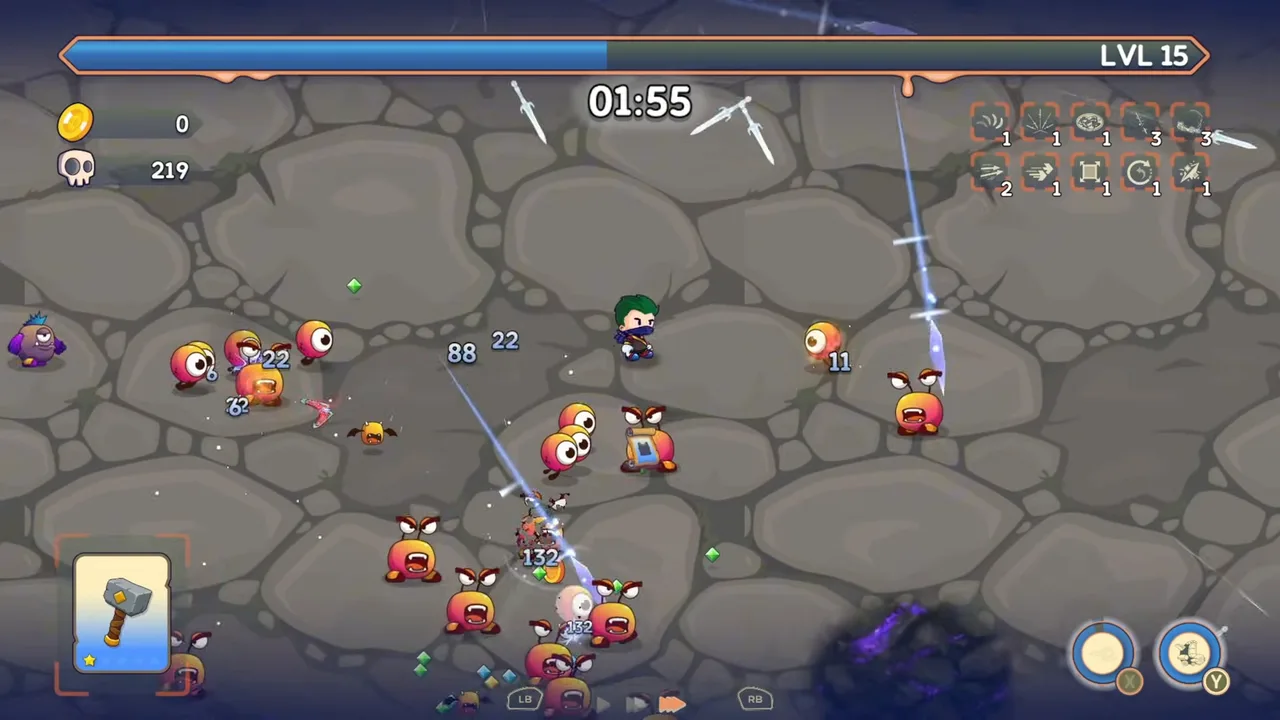
If you like chaos, tons of particle effects, and a kill count that climbs fast enough to trigger a GPU warning, Monster Rush Survivors gives you exactly that. It looks like a beautiful screen-melting disaster in the Vampire Survivors mold, but underneath, it tries to do a couple of things differently. I played the demo, and the short version is: play it, especially if you are a Survivors veteran looking for a brand new mountain to climb.
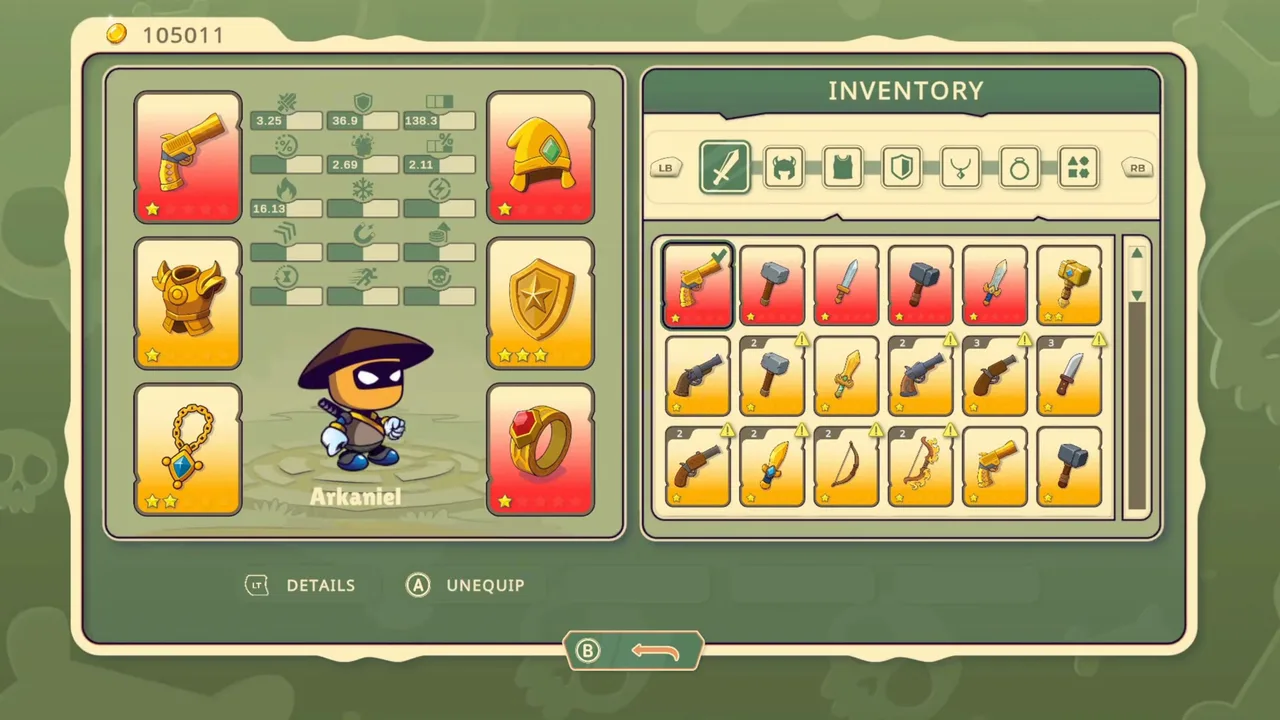
The loop itself will not surprise anyone. Kill monsters, collect gems to level up, save gold for permanent upgrades. The twist sits next to that loop: a real gear system. Instead of just farming gold, you actively hunt equipment with tiers, upgrade paths, and eventually amulet slots. Spreadsheet lovers, this is your moment.
The gear system is half real
Or so it seems on paper. In practice, I cleared most of the stages with basic two or three star gear - no PhD in item stats required. Despite the high volume of loot drops, most weapons and armor are completely useless, and you end up narrowing your loadout to three or four item types that feed two specific status effects. So much for all that variety.
Gear is also purely invisible stats. Items never change how your character looks, so your pixelated hero will never become a runway fashion model. The pieces that actually steer your build are the accessories: rings handle experience gain and elemental triggers, necklaces sort out crit rate and HP regeneration.
Characters pick up some of the slack. There is a big unlockable cast, each with a unique starting passive, an active ability, and different stats - some are raw health and damage, others lean into utility. Your limited gear choices end up doing one important job: doubling down on a character’s strengths, or desperately patching their weaknesses. Still, once the loot dopamine wears off, the actual variety wears thin.
RNG has a wicked sense of humor
The real build decisions happen mid-run, when you pick skills on level up. The pool is vast and keeps growing as you clear stages, and that size brings a balance problem: some skills are clearly the black sheep of the family. In a game where survival depends on clearing the screen fast, a low damage single-target skill or a slow proximity mine is just a fancy way of hitting the restart button.
You only get three random choices per level, so entire runs can pass without your main skills ever showing up. Adapting is fine, that is the fun part. Planning blind is not. There is no journal or codex of unlocked spells, so a skill that rolls rarely enough might as well not exist. And some tooltips do not seem real: Psychological Impact claims to pierce enemy armor, yet I have not seen a single armored enemy in this entire game (I assume they are hiding in the same place as my motivation to do laundry). Exile deals neutral damage, but nothing anywhere says enemies even have elemental resistances. If those numbers exist, the game guards them like a state secret.
Treasure chests deserve their own warning. Up to five skill rolls sounds generous, but chest rolls pull from the entire skill list, not your active slots. Open one early and you can permanently burn a precious skill slot on increased gold drops or pickup range. Treat chests like the toxic ex: avoid them until your life and your skill roster are completely sorted out.
Monster Rush Survivors screenshots
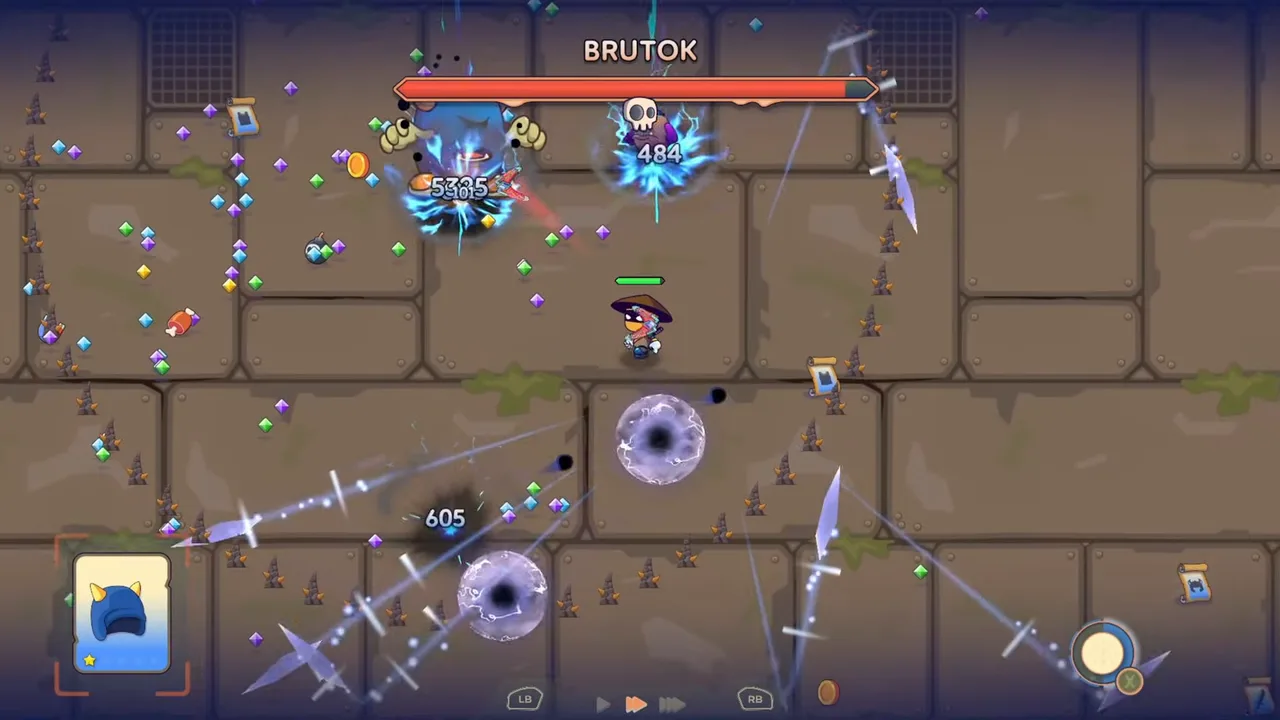
The bosses are the easy part
The early game asks for zero hours of grinding. Then the final two stage groups spike like a caffeine-induced heart attack, and you will be forced back to earlier levels purely to farm items and upgrade gear. Here is the strange part: all of that late difficulty lives in the waves themselves. The stage bosses are absolute pushovers - minimal damage, simple attack patterns that look like they move in slow motion. The true challenge is surviving the rough ten-minute mosh pit it takes to reach them.
Worth $4.99?
Since my demo playthrough, Monster Rush Survivors has fully launched at $4.99, and the demo is still free on Steam. The missing codex and the misleading tooltips are real quality of life problems, and the game leans hard on RNG. But that same RNG forces genuine, frantic adaptation from run to run, and the whole thing is incredibly addicting. Vampire Survivors veterans: your new mountain is here.